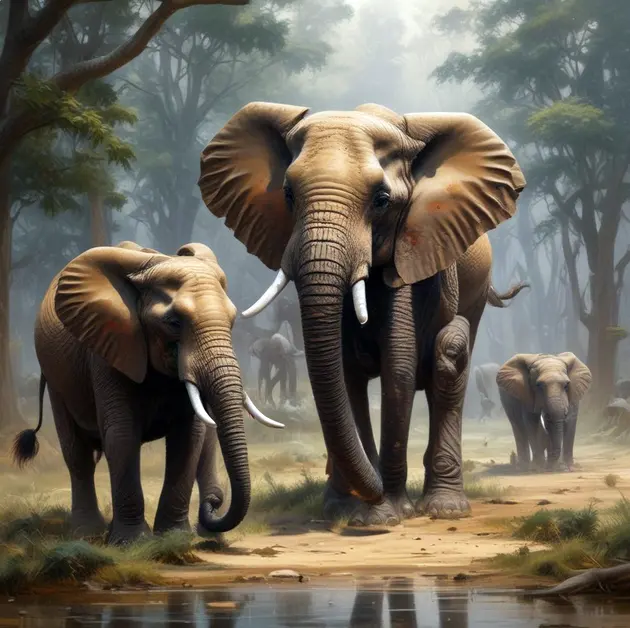

Memory That Doesn’t Fade With Time
A distant rumble, a scent carried by dry wind, a face glimpsed years ago—yet nothing is forgotten. Elephant long-term memory facts reveal something almost unsettling: these giants can recall threats, hostile encounters, and specific individuals even after decades.
Next time you forget something small, just say:
“An elephant somewhere still remembers something from 20 years ago… and I can’t remember why I opened this app.” 🐘📱
Not days.
Not months.
Decades.
Wildlife researchers studying elephant memory and recognition behavior noticed something strange. A herd encountering a human or predator that once caused harm reacts instantly—without hesitation, without confusion.
So here’s the question that sticks:
When an elephant looks at you… is it seeing you, or remembering something you don’t even know happened?
Recognition Beyond Sight
Visual memory is only one piece of the puzzle. Elephants rely on a layered system:
- Scent-based recognition across long distances
- Low-frequency sound identification (infrasound communication)
- Spatial memory linked to past events
- Emotional tagging of experiences
That last one matters more than expected.
Because elephants don’t just remember what happened…
they remember how it felt.
Encounters That Leave Permanent Marks
Field observations show herds reacting strongly to individuals or groups linked to past danger.
- Villages associated with conflict trigger defensive formations
- Specific human clothing or scent patterns create immediate tension
- Predators once encountered are recognized years later
- Routes connected to trauma are avoided for decades
No notes. No reminders. No repetition needed.
Memory stays.
2026 Findings: Emotional Memory in Focus
Recent behavioral studies added a new layer:
- Elephants show different reactions based on emotional intensity of past events
- Calves inherit cautious behavior by observing older herd members
- Long-term memory strengthens group survival strategies
- Recognition is not just individual—it becomes collective
That means one bad interaction doesn’t just affect one elephant.
It can influence an entire herd… for generations.
Facts That Make This Hard to Ignore
- Elephants can recognize individuals after 20+ years
- Memory includes both humans and predators
- Emotional stress strengthens recall accuracy
- Herd leaders guide group decisions based on past experiences
- Young elephants learn threats through observation
- Migration routes are remembered across decades
- Water sources are recalled even after long droughts
- Vocal signals can identify familiar individuals
- Defensive behavior activates instantly when threat is recognized
- Memory affects social bonding within herds
- Trauma can influence long-term movement patterns
- Recognition works through smell, sound, and sight combined
- Elephants rarely repeat mistakes involving danger
- Group memory improves survival odds
- Intelligence is deeply tied to emotional experience
A Quiet Kind of Intelligence
No puzzles. No tools. No visible “problem-solving performance.”
Yet something deeper is happening.
An elephant avoids a place where something bad once happened… even if years have passed.
Humans, on the other hand?
We touch the same metaphorical “hot stove” over and over again.
So maybe intelligence isn’t always about solving new problems.
Maybe it’s about never needing to solve the same one twice.
Social Memory: Not Just Personal
Memory doesn’t stay isolated.
- Herds share behavioral patterns
- Leaders influence group reactions
- Collective awareness develops over time
- Social bonds reinforce learned caution
One elephant remembers.
The group adapts.
That’s not just memory.
That’s transmission of knowledge without language.
FAQs About Elephant Memory
How long can elephants remember threats?
Documented cases suggest recognition after several decades.
Do elephants recognize humans specifically?
Yes, including scent, appearance, and behavior patterns.
Is their memory emotional or purely factual?
Emotional context plays a major role in recall.
Can elephants forgive past threats?
Evidence suggests avoidance and caution remain long-term.
Do all elephants have the same memory ability?
Older individuals, especially matriarchs, show stronger recall.
How do young elephants learn about danger?
Through observation and group behavior.
Can elephants remember locations as well as individuals?
Yes, including migration paths and water sources.
Does memory affect survival?
Strongly—experienced herds make better decisions.
Are elephants the best memory holders in the animal kingdom?
They rank among the top, especially for long-term recall.
Do they remember positive experiences too?
Yes, including social bonds and safe environments.
Rapid-Fire Elephant Memory Facts
- Long-term recall spans decades
- Emotional intensity strengthens memory
- Herd leaders guide decisions based on past
- Recognition includes scent, sound, and visuals
- Collective memory influences behavior
- Migration routes stored mentally
- Water locations remembered long-term
- Threat avoidance highly consistent
- Social learning shapes younger elephants
- Memory reduces repeated risk
- Vocal cues identify individuals
- Environmental awareness improves survival
- Trauma affects movement patterns
- Group intelligence emerges from shared memory
- Experience replaces trial-and-error behavior