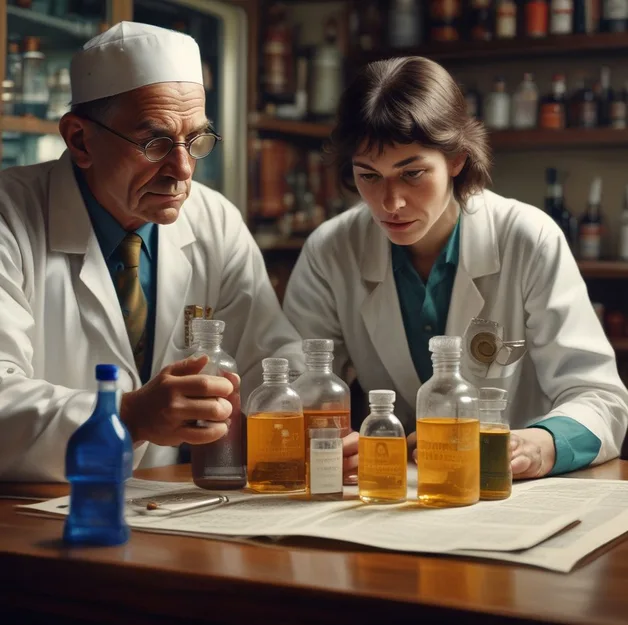

Some of the biggest discoveries in history didn’t come from careful planning — they came from pure accident. If you’ve ever searched “who discovered penicillin and how was it found”, you’re about to learn a story that feels almost too unlikely to be real.
Before we reveal the answer, here’s a small clue.
Quick Hint Before the Answer
Picture a scientist returning to his lab after a vacation… only to find that something strange has grown on his experiment. Instead of throwing it away, he gets curious.
That moment changed the future of medicine.
Who Discovered Penicillin?
Penicillin was discovered by Alexander Fleming in 1928.
But the real story is not just who discovered it — it’s how it happened.
How Was Penicillin Discovered?
This is where things get interesting.
A Lucky Accident in the Lab
Fleming was studying bacteria in his laboratory when he noticed something unusual:
- A mold had accidentally contaminated one of his petri dishes
- Around that mold, the bacteria were not growing
- Something in the mold was clearly killing the bacteria
Instead of ignoring it, Fleming investigated further — and that curiosity led to one of the most important medical breakthroughs in history.
What Is Penicillin and Why Is It Important?
Penicillin became the world’s first widely used antibiotic.
Why It Changed Everything
Before antibiotics:
- Even small infections could be deadly
- Cuts and wounds often led to serious illness
- There were very limited treatment options
After penicillin:
- Bacterial infections could be treated effectively
- Millions of lives were saved
- Modern medicine took a huge leap forward
It’s not an exaggeration to say penicillin changed human survival rates.
A Tiny Knowledge Check
Let’s pause for a quick test.
Mini Quiz
What made penicillin such a groundbreaking discovery?
A) It helped plants grow faster
B) It could kill harmful bacteria
C) It changed the color of chemicals
Correct answer: B
That simple ability — killing bacteria — transformed healthcare forever.
Was Alexander Fleming the Only Person Involved?
Even though Fleming made the discovery, he wasn’t the only one who contributed to making penicillin usable.
The Team Behind the Breakthrough
Scientists like Howard Florey and Ernst Boris Chain later helped:
- Develop penicillin into a usable drug
- Mass-produce it for medical use
- Turn the discovery into a global treatment
So while Fleming discovered it, others helped bring it to the world.
When Did Penicillin Start Being Used?
Although discovered in 1928, penicillin wasn’t widely used until the 1940s.
Why the Delay?
- It was difficult to produce in large amounts
- Scientists needed time to test and refine it
- World War II increased the demand for effective treatments
By the time it was mass-produced, it became a lifesaving tool for soldiers and civilians alike.
Interesting and Fun Facts About Penicillin
The story of penicillin is full of surprising details.
Things You Might Not Know
- Fleming initially called the substance “mold juice”
- The original mold came from a simple airborne spore
- Penicillin was once so valuable it was treated like a rare resource
- Early production methods were slow and complicated
- It led to the discovery of many other antibiotics
And here’s something unusual: if Fleming had been a tidier scientist, he might have thrown away the contaminated dish — and the discovery might have been delayed for years.
Why Penicillin Still Matters Today
Even though medicine has advanced, penicillin remains one of the most important discoveries in history.
Its Lasting Impact
- It opened the door to modern antibiotics
- It drastically reduced death rates from infections
- It continues to be used in medicine today
- It inspired future research in microbiology
The discovery of penicillin proves that sometimes, paying attention to small details can lead to massive breakthroughs.