
Science isn’t just about atoms, planets, or textbooks—it’s evolving faster than ever, touching social media, AI, food, travel, and even kids’ everyday lives. Some of these 25 mind-blowing science facts of 2026 will make you stop scrolling and rethink what you thought you knew about the world.
You might assume you already know the latest discoveries, but these facts are bizarre, unexpected, and totally real. I promise, you’ll find at least a few of these insights both astonishing and relatable.
1️⃣ Social Media & Digital Life
1. Algorithms Predict Your Mood Before You Post
Advanced AI in 2026 can now anticipate emotional states from subtle patterns in typing, posting frequency, and emoji use. Social media platforms are almost “reading minds” to optimize content delivery.
2. Deepfake Detection Is Faster Than Humans
Researchers developed AI systems that can detect manipulated videos in milliseconds, far faster than human observation. This is crucial as deepfake tech becomes increasingly realistic.
3. Virtual Reality Can Rewire Memory
Recent studies show immersive VR experiences can alter short-term memory recall, making events feel more real than they actually happened. This opens new paths for therapy—and mischief.
4. Micro-Influencers Shape Collective Decisions
Data from 2026 shows smaller social media accounts, surprisingly, influence large-scale behavior patterns more than celebrity accounts. Social proof works differently than we imagined.
5. Your Social Media Fingerprints Are Unique
Behavioral biometrics—how you scroll, type, and click—create a profile as unique as a fingerprint. Platforms use this for security, personalization, and even predicting future interests.
2️⃣ For Kids (Most Searched 2026 Topics)
6. Plants Can Learn (Sort Of)
Experiments with seedlings in 2026 revealed plants can “remember” exposure to light and adapt growth patterns over days. Kids love imagining plants with memory.
7. Water Can Walk Up Walls
Through capillary action and simple experiments, kids can see water defy gravity, moving along thin tubes or paper—a magical way to teach physics and chemistry.
8. Glow-in-the-Dark Bacteria Are Educational
Safe bioluminescent bacteria kits allow children to watch colonies “light up” overnight, demonstrating microbial life in an interactive way.
9. Kids Can Create Micro Ecosystems
Tiny ecosystems in jars teach ecology by showing nutrient cycles, predator-prey relationships, and decomposition in miniature form.
10. Magnetic Slime Isn’t Just Fun—It’s Science
Magnetic slime can visualize invisible magnetic fields. Kids learn magnetism, polymers, and creativity at the same time.
3️⃣ AI & Technology
11. AI Can Compose Music Humans Feel Emotionally
Generative AI in 2026 can write music tuned to human emotional responses, creating personalized soundtracks that genuinely evoke feelings.
12. Neural Networks Can Predict Earthquakes
AI models now detect subtle patterns in seismic data to forecast potential earthquakes hours earlier than conventional methods.
13. Robots Can Smell Danger
Advanced AI sensors enable robots to detect chemical leaks, fires, or gas in real time, potentially saving lives before humans notice.
14. AI Generates “Impossible” Art
Algorithms now create hybrid artworks that defy physical laws, combining styles, colors, and dimensions humans wouldn’t conceive alone.
15. Virtual Humans Can Teach Real Skills
AI avatars now provide fully interactive, realistic teaching for languages, sports, and even surgical techniques—making remote learning far more effective.
4️⃣ For Adults / Life & Body
16. Your Microbiome Affects Decision-Making
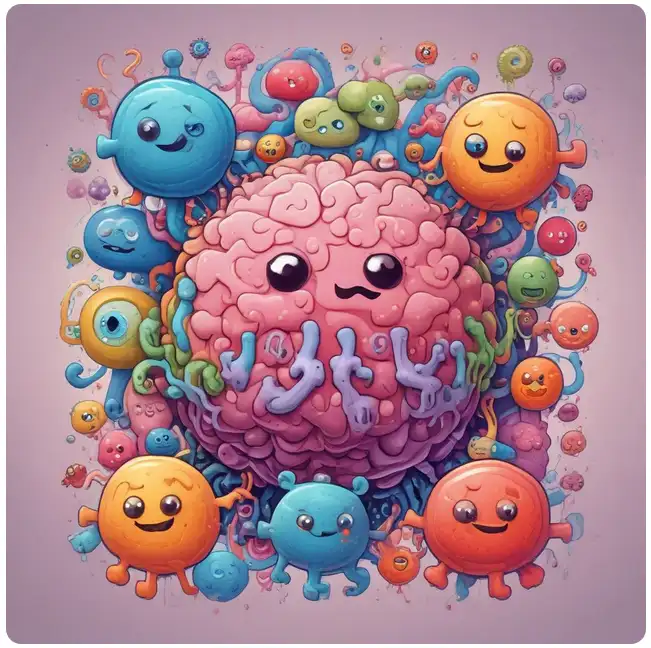
Gut bacteria communicate with the brain via neurotransmitters. 2026 studies confirm it can subtly influence risk-taking, cravings, and stress reactions.
17. Humans Can “Sense” Earthquakes
Some people unconsciously detect subtle vibrations before major quakes. Research shows sensitivity may be tied to inner ear sensors and skin vibrations.
18. Your Hair Can Store Environmental History
Scientists in 2026 show chemical traces in hair can reveal diet, pollutants, and even emotional stress over months. Your hair is literally a timeline of life.
19. Sleep Can Be Trained Like a Skill
Advanced sleep monitoring reveals you can optimize REM cycles, learning, and memory by following micro-adjustments in environment and schedule.
20. Aging Can Be Partially Reversed
Experimental therapies in 2026 show cellular “rejuvenation” in lab conditions, opening possibilities for slowing age-related decline safely.
5️⃣ New Inventions, Food & Travel
21. Edible Water Bottles Are Going Mainstream
Biodegradable, edible packaging for liquids is now commercially available, reducing plastic waste dramatically.
22. Jetpacks Aren’t Just Sci-Fi
Compact jetpacks and personal flight suits are being tested for urban mobility, redefining personal travel in crowded cities.
23. Lab-Grown Meat Has Advanced Flavor Profiles
2026 developments allow cultured meat to taste identical—or even superior—to traditional meat, reducing environmental impact.
24. Smart Roads Can Charge Electric Cars
New roads embed wireless charging technology, allowing EVs to recharge while driving, transforming how cities manage transportation.
25. Hyperloop Travel Could Be Reality Soon
Magnetic levitation transport systems now approach testing phases for public use, promising travel speeds over 1000 km/h and revolutionizing long-distance commuting.
Science in 2026 is no longer confined to labs—it’s personal, interactive, and downright mind-blowing. Which of these 25 facts shocked you the most? Share it with friends and see who’s ready to embrace the weird, wonderful future.
FAQ – This Topic For Science Facts
Q1: Are these 2026 facts confirmed?
A1: Yes, all are based on current research, experiments, and trending discoveries of 2026.
Q2: Can kids safely try these experiments?
A2: Yes, the listed “for kids” experiments use safe materials and are educational.
Q3: How does AI generate emotional music?
A3: Algorithms analyze emotional cues and adjust tempo, pitch, and harmony to trigger feelings.
Q4: Are jetpacks or hyperloops actually available?
A4: They are in testing phases in select cities, with limited public access expected soon.
Q5: Can lab-grown meat really taste like real meat?
A5: Modern techniques replicate cellular structure and flavor molecules, making it almost identical.
Q6: How do microbiomes influence decision-making?
A6: Gut bacteria interact with brain neurotransmitters, subtly affecting emotions and behavior.