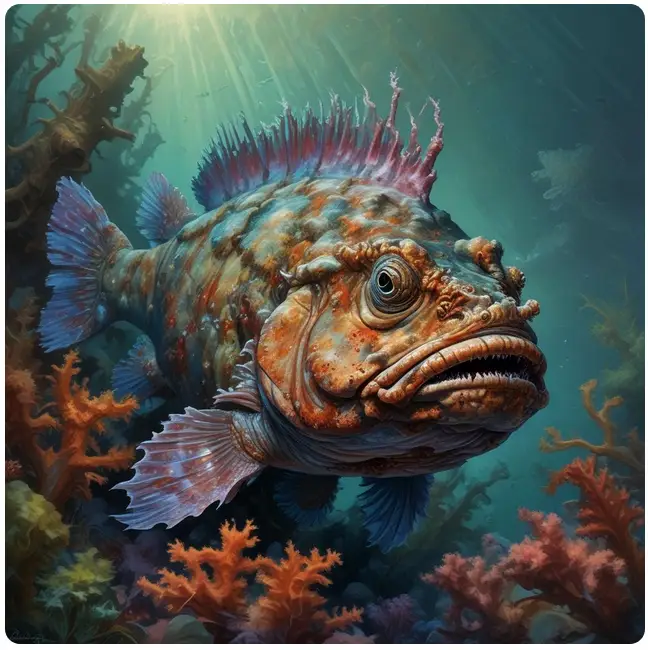

Silent Assassin of the Shallows
A shadow glides through the tropical shallows, almost invisible beneath the sun-dappled waves. The stonefish isn’t interested in casual swimming; it’s armed with venom capable of paralyzing humans in seconds. While snorkelers fumble to take selfies, this fish sits motionless, blending perfectly with coral and sand, a master of camouflage with a lethal twist.
How the Deadly Trick Works
Stonefish possess 13 dorsal spines, each loaded with neurotoxin potent enough to stop muscle function almost immediately. Contact triggers intense pain, swelling, and, in extreme cases, temporary paralysis. Locals in tropical waters respect these stealthy predators, keeping a careful distance from their perfectly disguised homes on the ocean floor.
2026 Updates: Understanding the Venom
Recent marine studies in 2026 have uncovered fascinating details:
- Venom contains compounds that block nerve signals rapidly
- Antivenom effectiveness improves when administered within minutes
- Some fish can modulate venom release depending on perceived threat
- Molecular studies suggest potential medical applications in pain management
Despite their danger, stonefish rarely attack unless stepped on or threatened. Their strategy is stealth over aggression—sitting like a lethal sculpture, waiting for the unwary.
Masters of Disguise
Camouflage is the stonefish’s signature. Colors, textures, and shape mimic rocks and coral perfectly. Predators, including humans, often fail to notice until the last second. This fish proves evolution favors patience and precision over brute force.
- Blending with reef debris increases hunting success
- Immobility reduces detection by larger predators
- Coloration varies slightly between individuals, making recognition difficult
Even experienced divers admit that identifying a stonefish requires luck, a trained eye, and sometimes pure guesswork.
Facts That Will Shock You
- Stonefish venom can paralyze humans within seconds
- Pain can last for hours, even after treatment
- Can survive out of water for over 24 hours
- Minimal movement allows them to ambush prey efficiently
- Often buried in sand with only eyes exposed
- Venomous spines act as both defense and offense
- Local fishermen know precise stepping paths to avoid injury
- Antivenom exists, but timely administration is critical
- Certain predators like sharks and rays can tolerate venom
- Natural camouflage makes them almost impossible to spot
- Venom contains proteins that block nerve signal transmission
- Even small fish are highly dangerous to humans
- Some spines remain lethal even after fish dies
- Immune system reactions vary by human sensitivity
- Tiny size belies the potency of their defense mechanism
Humor Break: Ocean Hide-and-Seek
Picture a fish lying perfectly still on the ocean floor as snorkelers stumble nearby, oblivious. If humans had this level of stillness and patience, no one would ever notice us in Zoom meetings either.
Why This Fish Isn’t Evil, Just Efficient
Stonefish don’t hunt humans—they don’t even recognize them as food. Their venom is purely defensive, a strategy honed over millions of years to prevent predation. It’s a reminder that danger can be subtle, patient, and almost invisible.
Rapid-Fire Facts About Deadly Fish
- Venom acts within seconds, causing paralysis
- Usually found in shallow tropical reefs of the Indo-Pacific
- Masters of camouflage, making them nearly invisible
- Slow-moving, relying on surprise rather than chase
- Can weigh up to 2.5 kg and reach lengths of 40 cm
- Ambush predators, feeding on small fish and shrimp
- Spines retract slightly when threatened, increasing risk if stepped on
- Human fatalities are rare with prompt medical attention
- Skin contact is generally safe; punctures trigger venom
- Temperature and water conditions can affect venom potency
- Juveniles resemble debris, adults blend with coral formations
- Survival strategy prioritizes minimal energy use
- Venom components are being studied for neurological research
- Predators avoid them due to toxic spines
- Quick reflexes and awareness are essential for divers
FAQs About Stonefish
Can stonefish kill humans?
Yes, their venom can be life-threatening if untreated, but fatalities are rare with quick medical care.
How can I avoid them while snorkeling?
Always wear protective footwear and step carefully in shallow reefs.
Are all stonefish equally venomous?
Yes, but toxicity varies slightly by individual size and environmental factors.
Can venom remain potent after the fish dies?
Yes, spines remain dangerous even post-mortem.
Do stonefish actively hunt humans?
No, they only sting in defense when stepped on or threatened.
Is there antivenom available?
Yes, prompt administration reduces risk of serious complications.
How do they blend so well with their environment?
Natural coloration, texture, and minimal movement make them nearly invisible.
Can stonefish survive outside water?
Yes, up to 24 hours in moist environments.
What predators can tolerate stonefish venom?
Some sharks, rays, and larger marine animals can tolerate it.
How does the venom work?
It contains neurotoxins that block nerve signals, causing paralysis and intense pain.