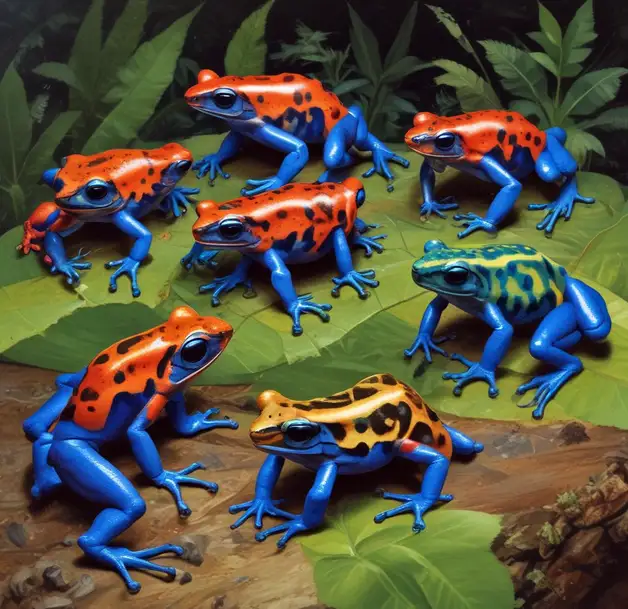

Small but Lethal
At first glance, these frogs could easily be mistaken for colorful candy dropped on a rainforest leaf. Bright yellows, electric blues, and fiery reds make them irresistible to the human eye, yet every hue signals a warning: touch, and danger lurks. Poison dart frogs may weigh less than a paperclip, but their skin secretes neurotoxins capable of stopping predators, and in some cases, humans. Size doesn’t always matter—these tiny amphibians are nature’s miniature ninjas.
How Poison Dart Frogs Deliver Their Secret Weapon
Venom doesn’t require fangs or stingers. It coats their skin, a passive but potent defense mechanism. Contact triggers severe effects for predators, ranging from disorientation to paralysis. Indigenous tribes of South America historically used these frogs’ toxins to coat blowgun darts, creating one of the deadliest hunting tools known to humanity.
- Neurotoxins interfere with nerve signals
- Rapid onset of symptoms prevents predators from persisting
- Toxins vary in potency by species and diet
- Bright colors act as a natural warning system
Even without aggression, the frogs’ chemical arsenal demands respect.
2026 Updates: New Insights on Toxicity
Recent research in 2026 shows that poison dart frogs’ venom may have more complexity than previously known:
- Some compounds show potential for painkiller development
- Venom potency increases when diet includes specific insects
- Certain species can adjust toxicity based on environmental stress
- New molecular studies are decoding how frogs store toxins without self-harm
These amphibians are tiny labs of biochemical innovation—miniature, mobile, and deadly.
Masters of Warning and Camouflage
Color isn’t just for aesthetics. It serves as a survival billboard: “Touch me, regret it.” The combination of warning colors and small size allows these frogs to navigate predation risk effectively. Some species can even flatten themselves against leaves, blending shadows and light to become almost invisible despite vivid patterns.
- Warning coloration deters potential predators
- Small size allows access to microhabitats unavailable to larger animals
- Rapid movement enhances escape when camouflage fails
Facts That Make These Frogs Fascinating
- Some species contain enough toxin to kill 10 adult humans
- Small size allows hiding in tiny crevices
- Bright coloration signals toxicity to visually-oriented predators
- Diet directly influences toxin potency
- Toxins are synthesized from alkaloids in insects consumed
- Skin secretions can last for weeks even after handling
- Certain frogs can jump up to 20 times their body length
- Neurotoxins act on sodium channels, disrupting nerve impulses
- Predators learn quickly to avoid brightly colored species
- Venomous frogs inhabit tropical rainforests across Central and South America
- Juveniles are sometimes less toxic than adults
- Some species exhibit complex mating calls despite toxicity
- Skin pigments protect from UV radiation as well as signal danger
- Toxicity varies seasonally with food availability
- Handling without care can be fatal for small mammals and birds
Humor Break: Frogs With a Punch
Picture a frog that looks like a miniature superhero, yet carries enough venom to stop a villain in its tracks. Humans would need body armor just to pick one up, and even then, caution is mandatory. Nature proves that danger can come in packages smaller than your thumb.
Survival Strategies Beyond Venom
Poison dart frogs combine chemical defense with behavior:
- Agile jumps allow rapid escape
- Nocturnal activity reduces exposure to some predators
- Grouping in microhabitats enhances warning signals
- Camouflage in shadows complements bright colors
- Moist skin prevents desiccation and maintains venom efficacy
FAQs About Poison Dart Frogs
Are all brightly colored frogs toxic?
Not always. Bright coloration often indicates toxicity, but exceptions exist.
Can humans die from handling them?
Extreme caution is required. Some species contain enough venom to be fatal.
How do frogs avoid poisoning themselves?
Frogs have evolved resistance to their own toxins through biochemical adaptations.
Do toxins serve any purpose beyond defense?
Primarily defense, but some compounds may deter microbial infection or parasites.
Are all poison dart frogs equally toxic?
No, toxicity varies by species, diet, and environment.
Can venom potency change over time?
Yes, diet and environmental factors can increase or decrease toxicity.
Do predators ever risk eating them?
Some snakes have evolved resistance, but most animals avoid brightly colored frogs.
How do indigenous peoples use frog toxins safely?
Careful extraction and coating on blowgun darts allowed controlled use without direct contact.
Are juvenile frogs as dangerous as adults?
Juveniles are often less toxic but still pose a threat to small predators.
Do they survive in captivity?
Yes, but without diet-based alkaloids, captive frogs lose much of their natural toxicity.