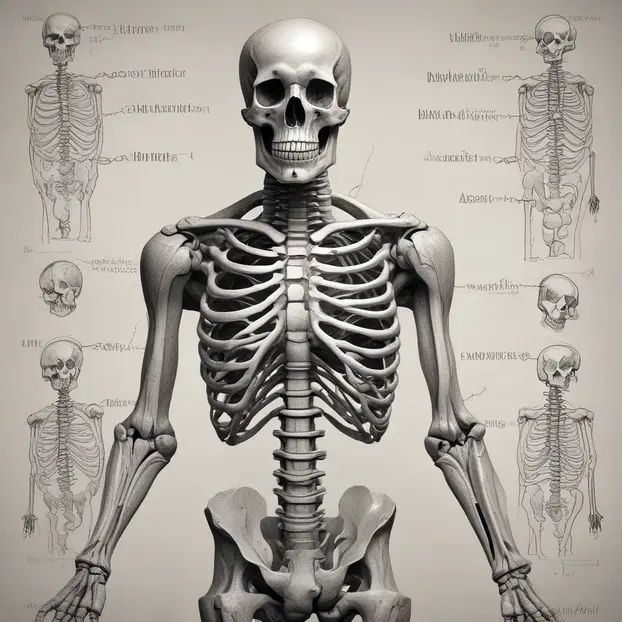

The human body is full of mysteries, and some are literally right under your skin. If you’ve ever asked “how many bones are in the human body and what do they do?”, you’re about to explore a framework that keeps us upright, moving, and protected every single day.
Before giving the number, here’s a hint.
Quick Hint
Think about something rigid yet flexible, that grows as you grow, and that’s essential for movement, protection, and support.
Can you guess how many there are?
How Many Bones Are in the Human Body?
A typical adult human body has 206 bones.
However, babies are born with around 270 bones, many of which fuse together as they grow.
How Are These Bones Organized?
The skeleton isn’t just a pile of bones—it’s a complex system.
Key Groups
- Axial Skeleton (80 bones): Skull, vertebral column, and rib cage
- Appendicular Skeleton (126 bones): Arms, legs, shoulders, and pelvis
Each group has a unique role in protecting organs, supporting weight, and enabling movement.
Why Does the Number Change from Childhood to Adulthood?
Babies have more bones because some fuse together over time.
Examples
- The skull starts as separate plates that gradually fuse
- The spine develops from more vertebrae that eventually join
- Fusion helps provide strength and stability
This fusion is why adults have fewer bones than infants.
A Mini Quiz
Let’s see how well you know your skeleton.
How many bones does an adult human body typically have?
A) 206
B) 210
C) 180
Correct answer: A
If you got it right, congratulations — you’re officially bone-smart!
Interesting and Fun Facts About Bones
Bones are more fascinating than they might seem.
Did You Know?
- The femur (thigh bone) is the longest bone in the human body
- The stapes in the ear is the smallest bone, only about 3 mm long
- Bones are living tissue — they grow, repair, and even produce blood cells
- Your skeleton makes up about 15% of your body weight
- Teeth are not bones, even though they are hard like bones
Here’s a fun twist: your skeleton is constantly renewing itself — every 10 years or so, most of your bones have completely regenerated!
Why Knowing About Bones Matters
Understanding your skeleton helps you appreciate how your body works and why bone health is essential.
Modern Importance
- Supports posture and movement
- Protects vital organs like the brain, heart, and lungs
- Produces red and white blood cells in the bone marrow
- Stores minerals like calcium and phosphorus
- Plays a key role in overall health and longevity
Your bones are silent heroes — strong, flexible, and vital to every step you take.