
Some questions seem simple, but when you start digging, the events behind them are massive. “In which year did World War II end?” is one of those questions — it’s not just about a year, it’s about the conclusion of one of the deadliest conflicts in human history.
Before giving the answer, here’s a small hint.
Quick Hint Before the Answer
Think about a year when celebrations erupted across the world, when cities breathed a sigh of relief, and when a war that had lasted six years finally came to a close.
Can you guess the year?
When Did World War II End?
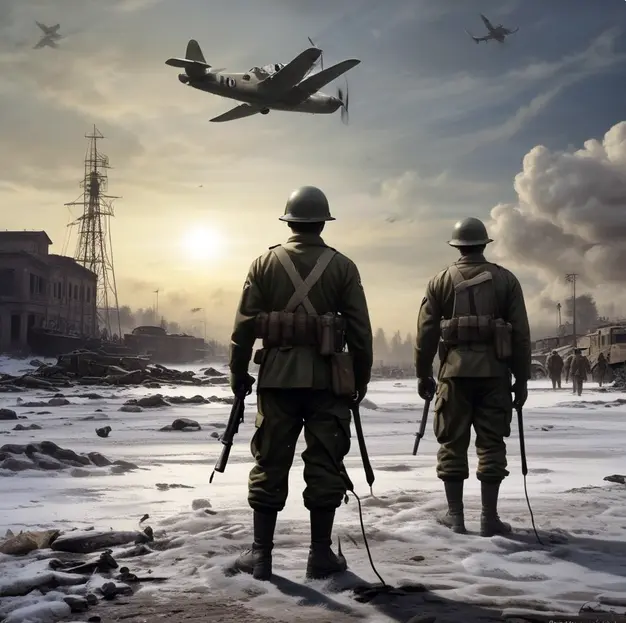
World War II officially ended in 1945.
- In Europe, victory came on May 8, 1945, celebrated as V-E Day (Victory in Europe Day)
- In Asia, the war concluded after Japan surrendered on September 2, 1945, known as V-J Day (Victory over Japan Day)
So depending on the theater, the war’s end has two notable dates.
Why Did World War II Last So Long?
The conflict began in 1939, making it a six-year global war. Several factors contributed to its length:
- Multiple continents involved: Europe, Asia, Africa, and the Pacific
- Advanced weaponry that made battles prolonged and deadly
- Complex alliances and political tensions
- Naval, air, and land battles happening simultaneously
World War II was truly global in scale.
What Happened in 1945 That Ended the War?
A series of critical events marked the war’s final year.
Key Moments
- April 30, 1945: Adolf Hitler committed suicide in Berlin
- May 8, 1945: Germany officially surrendered
- August 6 & 9, 1945: Atomic bombs dropped on Hiroshima and Nagasaki
- September 2, 1945: Japan surrendered aboard the USS Missouri
These events finally brought a close to six years of worldwide conflict.
A Tiny Knowledge Check
Time for a quick test.
Mini Quiz
Which year marks the official end of World War II?
A) 1939
B) 1945
C) 1950
Correct answer: B
If you picked 1945, you’re right on target.
How Did the World Celebrate the End?
The end of World War II sparked massive celebrations worldwide.
Memorable Moments
- People danced in the streets of London, Paris, and New York
- Radio and newspapers broadcasted the surrender news
- Soldiers returned home to reunite with families
- Governments held official ceremonies
It was a global moment of relief and hope for the future.
Interesting and Fun Facts About World War II’s End
Even decades later, the story of 1945 has surprising details.
Facts You Might Not Know
- The Japanese surrender ceremony was held aboard a battleship in Tokyo Bay
- Winston Churchill and Franklin D. Roosevelt both lived to see the war end
- Millions of civilians were celebrating even before formal surrender documents were signed
- The United Nations was created in the same year to prevent future conflicts
- V-E Day and V-J Day are still commemorated in many countries
And here’s an unusual detail: in some areas, local celebrations went on for days, with parades and street parties stretching across entire cities.
Why 1945 Still Matters Today
The end of World War II did more than stop a war. It reshaped the world.
Lasting Impact
- Led to the establishment of the United Nations
- Set the stage for post-war reconstruction
- Triggered the start of the Cold War
- Changed global political and economic systems
- Inspired generations to pursue peace and diplomacy
1945 is not just a date — it represents hope after immense struggle and devastation.