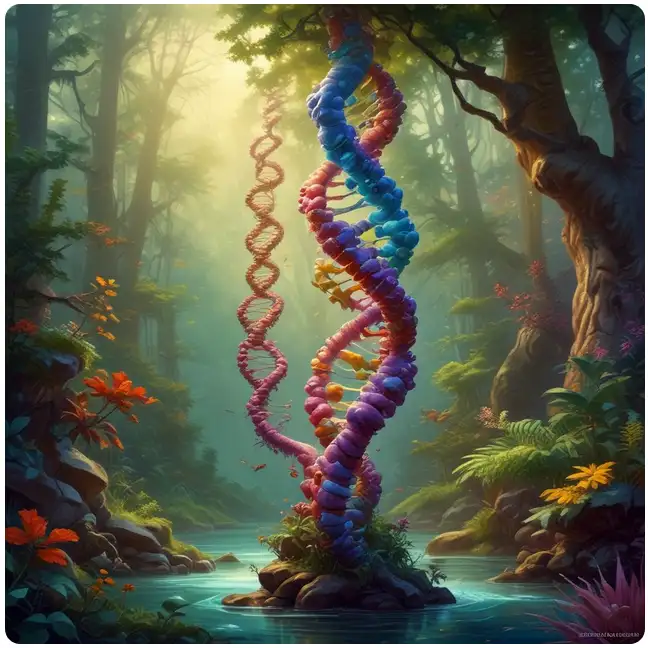

Life feels familiar—until you start looking closer (Hidden Truths You Never Noticed). Beneath everyday moments like breathing, healing, or even thinking, biology reveals processes so complex and surprising that they almost feel unreal.
You might assume you already understand how living things work, but some of these facts will completely shift your perspective. I promise, a few of these discoveries—backed by years of research and still evolving in 2026—will make you rethink what “life” actually means.
The Hidden Biology Behind Everyday Life
Before diving in, here’s something to keep in mind: biology isn’t just about plants and animals—it’s about invisible systems constantly working inside and around you. Let’s dive into some of the most amazing biology facts that reveal how strange and fascinating life truly is.
1. Your Body Contains More Bacteria Than Human Cells
It may sound shocking, but trillions of microorganisms live in and on your body. This human microbiome plays a critical role in digestion, immunity, and even mood.
2. Your DNA Could Stretch to the Sun and Back
If all the DNA in your body were laid end to end, it would stretch billions of kilometers. That’s how densely information is packed into your cells.
3. Your Brain Can Rewire Itself
Neuroplasticity allows the brain to form new connections throughout life, meaning learning and adaptation never truly stop.
4. Plants Can “Communicate” With Each Other
Through underground fungal networks, often called the “wood wide web,” plants share nutrients and signals about threats.
5. Your Skin Replaces Itself Constantly
Every few weeks, your body generates an entirely new outer layer of skin, shedding millions of cells daily.
6. Some Animals Can Regrow Entire Body Parts
Creatures like salamanders can regenerate limbs, spinal cords, and even parts of their hearts—a powerful example of biological repair.
7. Your Heart Has Its Own Electrical System
The heart can beat independently of the brain thanks to its internal pacemaker cells, showing how autonomous some body systems are.
8. You Share DNA With Almost All Living Things
Humans share genes not only with animals but also with plants and even bacteria, highlighting a deep evolutionary connection.
9. Your Body Glows—But You Can’t See It
Bioluminescence occurs at a very low level in human bodies due to metabolic reactions, though it’s invisible to the naked eye.
10. Some Bacteria Can Survive in Extreme Environments
Extremophiles live in boiling water, deep underground, or even radioactive environments, expanding our understanding of life’s limits.
11. Your Gut Is Sometimes Called a “Second Brain”
The enteric nervous system controls digestion and communicates with your brain, influencing mood and decision-making.
12. Oxygen Is Both Essential and Toxic
While we need oxygen to survive, it also produces reactive molecules that contribute to aging and cellular damage.
13. Some Animals Can Pause Their Lives
Tardigrades can enter a state called cryptobiosis, essentially pausing life until conditions improve.
14. Your Bones Are Constantly Rebuilding
Bone tissue is continuously broken down and rebuilt, meaning your skeleton renews itself over time.
15. Viruses May Have Shaped Human Evolution
Some viral DNA has become part of our genome, influencing traits and even immune system development.
16. Trees Can Live for Thousands of Years
Certain species, like bristlecone pines, have lifespans longer than recorded human history.
17. Your Body Produces Electricity
Cells communicate through electrical signals, especially in the brain and nervous system.
18. Some Organisms Don’t Age Normally
The “immortal jellyfish” can revert to earlier life stages, effectively avoiding aging under certain conditions.
19. Sleep Is Essential for Cellular Repair
During sleep, your body repairs tissues, consolidates memory, and removes waste from the brain.
20. Life Exists Deep Underground
Microorganisms have been found kilometers beneath Earth’s surface, living without sunlight in extreme conditions.
21. Your Sense of Smell Is Stronger Than You Think
Humans can distinguish thousands of different odors, even if we’re not consciously aware of it.
22. Some Species Can Clone Themselves
Certain plants and animals reproduce asexually, creating genetically identical copies.
23. Your Immune System “Remembers” Diseases
After exposure, your immune system can respond faster and stronger to the same threat in the future.
24. Cells Constantly Communicate With Each Other
Chemical signals allow cells to coordinate actions, repair damage, and maintain balance in the body.
25. Life Is More Connected Than It Seems
From ecosystems to microscopic interactions, all living things are part of a vast, interconnected biological network.
Biology reveals that life is far more complex, adaptive, and surprising than we often realize. So here’s something to think about: which of these facts changed how you see life the most? Share it and see how others react to the hidden science of living systems.
FAQ
Q1: Are these biology facts scientifically proven?
A1: Yes, all facts are based on biological research and updated scientific understanding, including recent findings.
Q2: What is the human microbiome in simple terms?
A2: It’s the collection of microorganisms living in and on your body that help with digestion, immunity, and overall health.
Q3: Can the brain really rewire itself?
A3: Yes, through neuroplasticity, the brain forms new connections throughout life.
Q4: How do plants communicate with each other?
A4: They use underground fungal networks and chemical signals to share information and nutrients.
Q5: Why is sleep important biologically?
A5: Sleep allows the body to repair cells, process memories, and maintain overall health.
Q6: Are there organisms that don’t age?
A6: Some, like certain jellyfish, can revert to earlier stages, effectively avoiding typical aging processes.