
Nature is full of repeating designs that most people pass by without noticing. From the spirals of seashells to the fractal shapes of ferns, hidden patterns reveal profound truths about growth, adaptation, and the physics of life. In 2026, scientists continue to uncover surprising facts about these structures, showing that nature is both artistic and mathematically precise. These aren’t just pretty visuals—they’re clever survival strategies written in patterns.
1. Fibonacci in Flowers
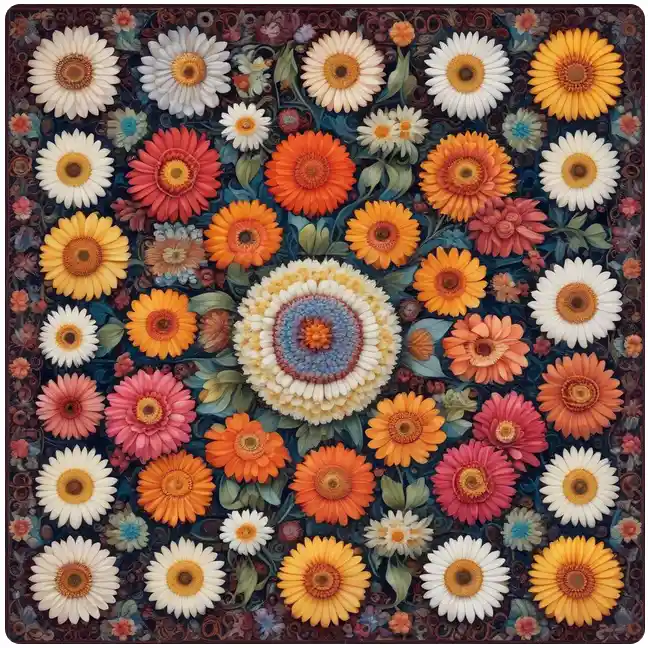
Many flowers display petal arrangements following the Fibonacci sequence. This pattern isn’t random—it optimizes sunlight exposure and space efficiency. A surprising truth that blends mathematics with botany in a way few people truly appreciate.
2. Animal Coat Patterns as Evolutionary Codes
Leopard spots, zebra stripes, and butterfly wings aren’t just beautiful—they’re evolution’s way of camouflaging, communicating, or confusing predators. These recurring motifs are living instructions encoded in DNA, revealing a hidden structural logic in nature.
3. River Meanders Mirror Tree Branching
Rivers often form meandering curves that surprisingly resemble the branching patterns of trees. Scientists studying fluid dynamics and landscape evolution find this a fascinating fact about how energy efficiency shapes both water and plant forms.
4. Spirals in Shells and Horns
Seashells, snail shells, and ram horns often follow logarithmic spirals. These spirals maximize strength while minimizing material—a hidden truth that shows nature’s engineering genius. Observing a simple shell can teach lessons in architecture and resilience.
5. Leaf Veins Follow Optimization Rules
Leaf venation isn’t arbitrary; veins spread in patterns that optimize water transport and sunlight absorption. This structural pattern is both functional and aesthetically beautiful—a nature fact often overlooked by casual observers.
6. Snowflakes: Unique Geometric Wonders
Every snowflake has a unique crystalline pattern. Yet, all follow the physics of ice formation, temperature, and humidity. This combination of individuality and uniformity is a fascinating truth about hidden patterns in seemingly random events.
7. Sand Ripples and Desert Dunes
Desert dunes and underwater sand ripples form repeating patterns influenced by wind, water, and particle size. These micro and macro patterns are surprising truths about how small forces create large-scale natural designs.
8. Animal Migration Patterns
Many animals follow predictable, repeating migration paths influenced by geography, climate, and instinct. From birds to whales, these hidden patterns optimize survival, revealing that movement itself is a form of nature’s repeating structure.
9. Coral Growth Forms Fractals
Coral reefs often grow in fractal patterns, creating intricate shapes that maximize surface area for feeding and sunlight capture. These hidden geometries are living illustrations of math and biology working in perfect harmony—a fact that few people realize.
10. Patterns in Predator-Prey Behavior
Even behavior can follow hidden rhythms. Predator hunting cycles and prey movement patterns often display predictable periodicity. Observing these patterns gives scientists rare insights into ecosystems, revealing surprising truths about survival strategies.
Nature’s hidden patterns are everywhere—from microscopic veins to sweeping landscapes. They are functional, beautiful, and sometimes astonishingly precise. In 2026, studying these structures continues to reveal unexpected connections between math, biology, and ecology. Next time you wander through a forest, stroll along a river, or examine a shell, pause and ask yourself: what repeating patterns are quietly shaping life around me?