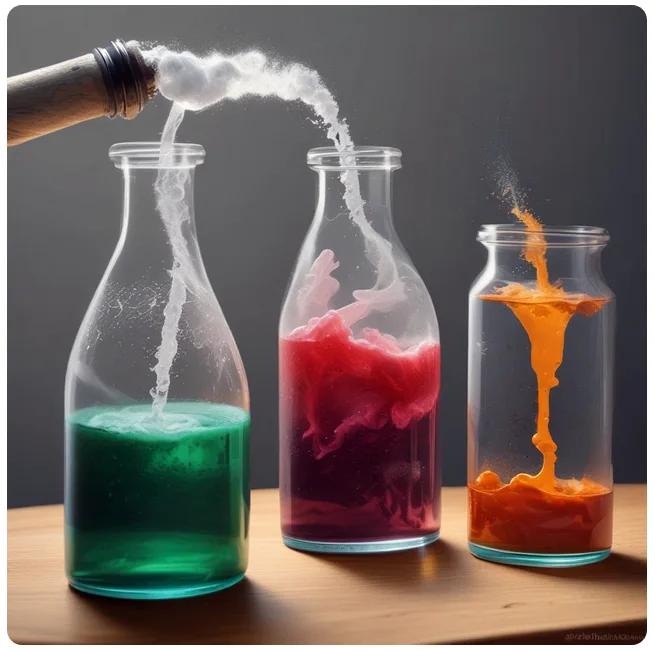

Ever wondered how ordinary household items can transform into mind-blowing experiments? From fizzing reactions to floating surprises, these science activities let your curiosity run wild while showing just how amazing everyday physics and chemistry can be.
You might think science is only for labs, but some of these experiments will blow your mind. Whether it’s exploring color-changing liquids or watching a homemade volcano erupt, the excitement starts in your own kitchen.
Let’s Explore Some Surprising Science Tricks
Prepare to be amazed! You won’t believe what simple ingredients can do when mixed with a little curiosity. Each experiment below is designed to be safe, fun, and educational, perfect for anyone who loves a little hands-on discovery.
1. Baking Soda and Vinegar Volcano
Mixing baking soda with vinegar is a classic, but did you know you can control the eruption by adjusting the amounts? Try shaping a mini mountain with clay around the reaction for an even more dramatic effect. This experiment teaches acid-base reactions in a way that’s visually stunning.
2. Rainbow Milk Experiment
Pour a few drops of food coloring into a shallow dish of milk and add a drop of dish soap. The colors dance and swirl as the soap breaks the surface tension. It’s a simple, mesmerizing way to learn about chemical reactions and surface tension.
3. Homemade Slime
Combine glue, baking soda, and contact lens solution to create slime that stretches, bounces, and surprises. Kids (and adults) love the tactile fun, while learning about polymers and how molecules interact.
4. Floating Egg Experiment
Did you know you can make an egg float without a cork? Dissolve enough salt in water, drop the egg in, and watch it levitate. This teaches density and buoyancy, showing physics in a way that’s easy to understand at home.
5. Static Electricity Butterfly
Cut a paper butterfly, place it on a flat surface, and rub a balloon on your hair. The butterfly will flap its wings as if alive. This experiment demonstrates static electricity in an interactive and playful way.
6. Invisible Ink with Lemon Juice
Write secret messages using lemon juice as ink. Once it dries, gently heat the paper and watch your hidden words appear. It’s a creative way to explore oxidation and chemical reactions while feeling like a real-life spy.
7. Mentos and Soda Fountain
Drop a few Mentos candies into a bottle of soda for a spectacular eruption. The reaction between carbon dioxide bubbles and the candy surface creates a fizzy fountain, an unforgettable demonstration of gas release.
8. Balloon Rocket
Attach a balloon to a straw on a string and release the air. Watch it zoom across the room! This hands-on experiment teaches Newton’s Third Law of Motion in a visual and exciting way.
9. DIY Lava Lamp
Mix water, oil, and a fizzy tablet in a clear bottle to create a bubbling lava lamp effect. The interaction between oil, water, and gas bubbles illustrates density and chemical reactions in a mesmerizing display.
10. Color-Changing Cabbage Water
Boil red cabbage leaves in water to create a natural pH indicator. Add vinegar or baking soda to see dramatic color changes. It’s an amazing, visual way to explore acids, bases, and indicators with everyday items.
Science experiments like these are not only fun—they spark curiosity, encourage problem-solving, and sometimes create moments that seem almost magical. Which of these experiments are you excited to try first? Share your results and let’s inspire others to explore the wonders of science at home.
FAQ
Q1: Are these experiments safe for kids?
A1: Yes, all experiments listed use household items and are safe with adult supervision for younger children.
Q2: Do I need special equipment for these experiments?
A2: No, most experiments use common kitchen items or school supplies, making them easy to try at home.
Q3: Can I modify the experiments to make them more challenging?
A3: Absolutely! Experimenting with quantities, colors, or setup can make these activities more advanced and educational.
Q4: How long do these experiments take?
A4: Most can be completed in 10–20 minutes, though some, like slime or lava lamps, may take longer to prepare.
Q5: Can these experiments be used for school projects?
A5: Definitely! They are visually impressive, teach scientific concepts, and are great for demonstrating understanding of chemistry and physics.
Q6: What age group are these experiments best for?
A6: These are suitable for children 6+, but older kids and even adults will enjoy the creativity and discovery involved.