
A Life Hidden Where Almost No One Looks
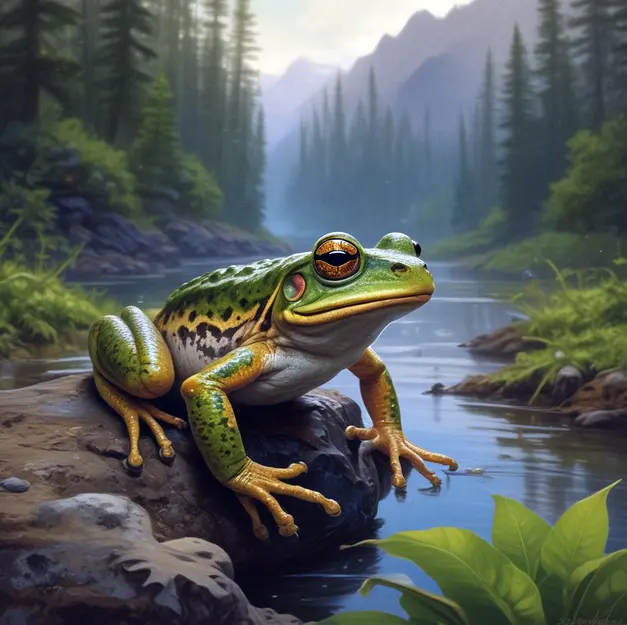
Remote valley frog species facts often sound like exaggeration—until you realize some creatures truly exist in just one isolated corner of the planet. Not a region. Not a country. One valley.
Surrounded by steep cliffs, dense vegetation, and shifting climate patterns, this rare amphibian species survives in a place most humans will never visit. No migration. No expansion.
Just… one fragile home.
So here’s the quiet question:
What happens if something changes there?
Isolation That Shaped an Entire Species
Geographic isolation doesn’t just limit movement—it creates uniqueness.
- No gene flow from outside populations
- Adaptation to very specific humidity and temperature
- Unique skin patterns found nowhere else
- Highly specialized diet linked to local insects
Everything about this frog is tied to that valley.
Take it out… and it doesn’t just struggle.
It disappears.
Evolution in a Closed World
Living in isolation changes how evolution works.
- Traits become highly refined but less flexible
- Survival depends on environmental stability
- Small population size increases vulnerability
- Slight disruptions have amplified effects
That means this frog isn’t just rare.
It’s extremely dependent on everything staying exactly the same.
2026 Observations: Fragility Becomes Clear
Recent ecological monitoring revealed:
- Population numbers fluctuate with seasonal moisture shifts
- Minor temperature changes impact breeding success
- Habitat boundaries are narrower than previously thought
- External disturbances show immediate behavioral changes
Even subtle environmental shifts ripple through the entire population.
Nothing about this species is built for change.
Facts That Feel Almost Unreal
- Entire global population exists in a single valley
- Habitat range can be measured in kilometers
- Breeding cycles depend on precise humidity levels
- Skin absorbs moisture directly from environment
- Color patterns provide camouflage unique to local terrain
- No migration behavior observed
- Limited genetic diversity increases risk
- Predators are specific to the same region
- Microclimate defines survival conditions
- Even slight habitat damage affects entire species
- Reproduction windows are short and highly sensitive
- Sound patterns differ from related species
- Population recovery is slow after disruption
- Environmental balance must remain stable
- Survival depends on factors humans rarely notice
A Thought That Stays With You
A single valley.
One landslide, one drought, one human intrusion…
And an entire species could quietly vanish—without most of the world even realizing it existed.
That’s not dramatic.
That’s reality for many rare ecosystems.
Survival Without Backup
Most animals have options.
Move. Adapt. Expand.
This frog?
- No alternative habitat
- No secondary population
- No migration route
- No margin for error
Everything is tied to one location.
And that changes how we think about survival.
Why Scientists Are Paying Attention
Not because it’s just rare—
but because it reveals something bigger.
- How ecosystems create hyper-specialized life
- How fragile biodiversity can be
- How quickly imbalance can erase uniqueness
- How isolation shapes evolution differently
This frog is not just a species.
It’s a case study in survival limits.
FAQs About This Rare Frog Species
Why does it exist in only one valley?
Geographic isolation and specific environmental conditions limit its range.
Can it survive elsewhere?
No, its adaptations are too specialized for other habitats.
Is it endangered?
Yes, due to limited population and environmental sensitivity.
What threatens its survival?
Climate shifts, habitat disruption, and human activity.
Why hasn’t it spread to other areas?
Natural barriers and specialized needs prevent expansion.
How do scientists study it?
Through careful observation, environmental monitoring, and minimal interference.
Does it have unique traits?
Yes, including distinct coloration, behavior, and environmental dependence.
Can conservation efforts help?
Yes, but they must focus on protecting its exact habitat.
How fast can the population recover?
Slowly, due to limited breeding cycles and small numbers.
Why is it important?
It represents biodiversity that exists nowhere else on Earth.
Rare Frog Facts
- Exists in a single isolated valley
- Highly specialized environmental needs
- No migration or expansion behavior
- Population sensitive to minor changes
- Unique coloration tied to habitat
- Limited genetic diversity
- Breeding depends on precise conditions
- Survival linked to microclimate stability
- Predators limited to same ecosystem
- Recovery from disruption is slow
- Evolution shaped by isolation
- Habitat boundaries extremely narrow
- Environmental shifts have immediate impact
- Species uniqueness cannot be replicated
- Conservation depends on habitat protection
Next time someone says “there are plenty of frogs out there,” drop this:
“There’s one frog chilling in a valley you’ll never visit… and it’s rarer than your Wi-Fi signal on a road trip.” :D:D