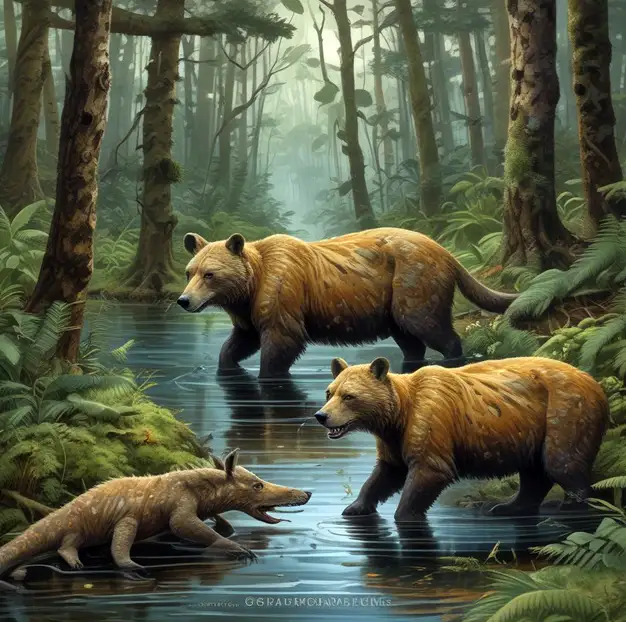

A Species That Vanished Without a Trace
Lost species rediscovered after decades facts usually sound like hopeful headlines—until one actually reappears where no one expected it. This nearly invisible creature, once recorded and then forgotten for half a century, quietly survived while the world assumed it was gone.
No sightings.
No signals.
No proof it still existed.
Then suddenly… it was there again.
So here’s the question that lingers:
Was it hiding… or were we simply not looking properly?
Disappearing Without Truly Leaving
Not every “extinct” species is gone. Some just become… undetectable.
- Camouflage blends perfectly with surroundings
- Activity patterns avoid human observation
- Habitat locations remain difficult to access
- Population density drops below detection level
That doesn’t mean absence.
It means invisibility.
The Rediscovery Moment
A research team scanning a remote ecosystem noticed something unusual—movement where none was expected.
At first, it didn’t stand out.
Then patterns appeared.
Then behavior matched old records.
Then confirmation hit.
The same species… last seen over 50 years ago.
Now pause for a second.
How many other “missing” creatures are still out there… just unnoticed?
2026 Findings: Hidden Survival Strategies
Recent analysis revealed how this species managed to remain unseen:
- Movement patterns shifted to avoid peak observation times
- Habitat zones overlapped with difficult terrain
- Visual appearance blended with environmental textures
- Population remained small but stable
In other words, it didn’t survive loudly.
It survived quietly.
Facts That Feel Almost Unreal
- Species remained undetected for over 50 years
- Camouflage made visual identification extremely difficult
- Activity increased during low-human-presence periods
- Habitat location remained largely unexplored
- Behavioral patterns reduced detection probability
- Population size stayed minimal but sustainable
- Rediscovery required advanced observation techniques
- Movement often mistaken for environmental noise
- Physical traits matched historical records exactly
- Survival depended on staying unnoticed
- Environmental stability supported long-term existence
- No major evolutionary changes observed
- Detection required multiple confirmation stages
- Rediscovery challenged extinction assumptions
- Scientists continue monitoring for population growth
A Thought That Changes Perspective
An entire species lived, moved, fed, and survived…
While humans believed it no longer existed.
Not hidden in a fantasy world.
Not deep underground.
Right here.
Just… overlooked.
So maybe extinction isn’t always immediate disappearance.
Sometimes it’s simply falling outside human awareness.
Why It Was Missed for So Long
Not because scientists weren’t trying—
but because nature doesn’t always make things easy.
- Limited access to habitat areas
- Misidentification due to similarity with surroundings
- Low population density
- Lack of consistent monitoring
Even advanced tools struggle when a species is designed to blend in.
Survival Without Attention
Most species rely on visibility—signals, movement, sound.
This one did the opposite.
- Reduced activity during high-risk periods
- Minimal interaction with other species
- Strong camouflage advantage
- Quiet adaptation to environment
It didn’t fight for attention.
It survived by avoiding it.
What This Means for Other “Lost” Species
Rediscovery changes more than one story.
- Encourages re-evaluation of “extinct” classifications
- Expands search efforts in overlooked regions
- Highlights importance of subtle observation
- Reminds scientists that absence of evidence isn’t evidence of absence
There may be more out there.
Waiting.
FAQs About Rediscovered Species
How can a species go unseen for 50 years?
Camouflage, remote habitat, and low population make detection extremely difficult.
Was it considered extinct?
In many cases, species like this are labeled “possibly extinct” before rediscovery.
What led to its rediscovery?
Improved observation techniques and renewed exploration efforts.
Has the population recovered?
Usually still small, requiring ongoing monitoring.
Can it disappear again?
Yes, especially if environmental conditions change.
Why is rediscovery important?
It reshapes conservation priorities and scientific understanding.
Are there more species like this?
Very likely, especially in remote or understudied ecosystems.
Does rediscovery guarantee survival?
No, protection efforts are still necessary.
How do scientists confirm identity?
Through comparison with historical records and modern analysis.
What makes this species unique?
Its ability to remain undetected for decades while surviving.
Rediscovery Facts
- Species unseen for over 50 years
- Camouflage played a major role
- Habitat difficult to access
- Population small but stable
- Behavior minimized detection
- Rediscovery required advanced tools
- Environmental stability supported survival
- Movement patterns avoided observation
- Visual similarity to surroundings caused confusion
- Monitoring continues after rediscovery
- Conservation efforts increase post-confirmation
- Extinction assumptions challenged
- Hidden biodiversity still exists
- Detection depends on persistence
- Nature can conceal life effectively
Next time someone says something is “gone forever,” try this:
“There’s a creature out there that ghosted humanity for 50 years… and just showed up like nothing happened.”